


Faith, hope and love are the three ‘cardinal’ (or primary) virtues in the Christian faith. As Paul the Apostle wrote: ‘Faith; hope; love; these three endure’ ‘but the least understood is hope.’ Actually, that last bit is a quote from the late, great Baptist preacher (and Durham graduate) David Pawson – a gloss on 1 Corinthians 13 that I have never forgotten. Christians find eschatology (a word I’m going to use because there is just no simple word to mean ‘beliefs about God’s promised future’) confusing, or shy away from it, because they see it as the cause of sharp disagreement between believers. In fact, Christian eschatology is quite specific and simple to understand. Even the essence of the main disagreements can be simply expressed, as we shall see.
People often use the word ‘hope’ to express expectation of good things in the future. US President Barack Obama was elected off the back of his book ‘The Audacity of Hope’ with the campaign slogan: ‘Yes we can!’ This sounded a bit Bob the Builder to a Brit like me, but it encapsulated political optimism and advocated social activism as a solution to the nation’s difficulties and divisions. But true Christian hope is not mere optimism about the future. Christian hope is directed towards God – in Him we hope as the one who has both promised the future and has the power to do what He has promised. True hope is trust in God and hope for His purposed future actions to ‘put the world to rights’ (N.T. Wright). Any promise is only as certain as the promise-maker is reliable and has the power to fulfil their promises. God always does what He says and He has all power in the cosmos, so our hope in God for His promises is sure and certain.
In Christian doctrine, rooted in the Bible, God has promised to act in five ways that are closely associated together in Scripture. They are summarised in the Nicene Creed: (i) Christ will appear: ‘He will come again in glory’; (ii) the dead will rise: ‘the resurrection of the dead’; (iii) all will give a final accounting to Christ: ‘He will judge the living and the dead’; (iv) Jesus will have an eternal kingdom ‘His Kingdom will have no end’; and (v) there will be a New Creation: ‘we believe in the life of the world to come.’ Not just Bible-believing Christians but all Christians who confess the creeds accept these five doctrines of Christian eschatology: they are God’s promised future actions.
None of these are about ‘heaven’. Heaven is real. It is where God lives and where believers enjoy fellowship with Christ when they die (which those not ‘in Christ’ cannot). But heaven is the overnight stay on the way to the final blessedness (and condemnation) that will only fully and finally appear when Christ comes in glory, raises the dead to bodily life and welcomes the faithful into the glories of the New Creation. In that New Creation heaven and earth will be renewed and united. Then God and His people will enjoy the eternal face-to-face fellowship that was whispered in Eden, seen in Jesus’ earthly life and which is God’s ultimate blessing for His beloved.
Because these things are future no one has experienced them yet. I was told in my first every preaching class that preachers should not speak about things outside their own experience – good advice to over-enthusiastic young preachers! But later I was struck by Dietrich Bonhoeffer’s sensible observation that it is the responsibility of the preacher to speak of things outside their experience: heaven, angels, final resurrection, coming judgment, hell and so forth. We can only speak of such things because they are revealed in Scripture.
It is well known that Christians disagree about eschatology. To put it (over-)simply the main disagreement is about where the Kingdom fits into the sequence: Appearing – Final Resurrection – Judgement – New Creation.
Some are optimistic and think that the kingdom will come before Jesus’ appearing (these are ‘Postmillennialists’) and that all our prayers and work will usher in Christ’s kingdom on earth. The strengths and weaknesses of this view can be expressed in a single word: optimism. It perhaps overestimates our capacity to achieve God’s ends in this world even in His power. But it also motivates us to see the value of His work in us as a contribution to His final purposes. Premillennialists (following Revelation 20 closely) think that the resurrection happens in two stages: believers first and then, after the ‘1000-year’ reign of Christ on earth, the rest of the dead for final judgement. Some find this too literalistic and tied to a single text, but it has the benefit that it reminds us that God created this material world a good place that will one day see the fulfilment of that divine intention. Others (the ‘amillennialists’) believe that the New Creation is the same thing as the eternal kingdom and so sit light to any full appearance of the Kingdom on earth before then. This fits well with our experience of a world where acceptance of Christ’s rule often seems partial and patchy at best. But it also tends to confine Christ’s full reign to heaven and to suggest that it can only ever be partial on this earth. What is at stake here is what people are thinking when they pray ‘Your Kingdom come, Your will be done on earth as it is in heaven.’
This basic outline of the main five points of Christian eschatology matters acutely because you should always ‘begin with the end in mind’ (Covey). Or to put it bluntly: if you don’t know where you’re going, I’m not coming with you. God’s purpose from the very beginning, which was revealed in the incarnate life, atoning death and life-giving resurrection of Jesus, finds its fulfilment in the five eschatological acts of God for which we hope. Eschatology invites us to lift our eyes from the challenges (and joys) of this world and reminds us to reorient our lives around the fact that they will one day be entirely subsumed in God’s promised final purposes.
Eschatology made Christianity the world’s first ever missionary religion. And it made early Christians courageous. Jesus sent out his disciples with the conviction that He had ‘all authority in heaven and on earth’. They announced the crucified, risen Jesus, ascended to authority over the whole cosmos, to Whom everyone will give account one day – a message with implications for every human being, everywhere, for all time. All will give final account to Him and no other. And our hope of final salvation is in Him alone. If Jesus, Who loved us and gave Himself up for us, is Lord of all and final judge of every life, we need fear no tyrant and no enemy – not even death itself.
The ‘cash value’ of Christian eschatology is always ethics: how we believe and behave here and now. 1 John 3.2-3 sums it up succinctly: ‘when we see Him we shall be like Him for we shall see Him as He is. Whoever thus hopes in Him purifies himself as He is pure.’ Eschatology fuels our conviction that God has an interest in redeeming His material creation. It tells us that our bodies are here not to be used and abused, but for the glory of God Who will make them new one day. It reinforces our sense that this is a moral world where there is real good and real evil and it makes believers serious about living to please God and do good. Eschatology makes us confident that all the horrors of evil under which the world groans will finally submit to the One whose ways are just and true. It strengthens us to live humbly and hopefully before the critic who taunts the good and all-powerful God with the injustices of his world. And it reminds us that one day, in response to the cry of the righteous oppressed: ‘How long, O Lord?’, will come the trumpet cry: ‘the kingdoms of this world are become the kingdoms of our God and of his Christ.’ And eschatology means being people of mercy and grace, since we know that it is not our works, for good or ill, but God’s gift in the cross of Christ, in Whom we hope, that will finally save us.
In eschatological hope we daily stand firm on Christ’s promise that through the life-giving Spirit, He will give us life and bring us to eternal fellowship with Him, God the Father and all His holy people in His New Creation. Then the New Heaven will be united with the New Earth and ‘God will make his dwelling with humans’. Then we will no longer pray ‘Our Father in heaven’, for we will see our Maker face to face, lost in the uncreated light of His incandescent glory. Then (and only then) will we be able to taunt death (for it taunts us all our lives): ‘Death, where is your victory? Where, O grave, your sting?’ Hoping in the God of life and love, we are invited to live and long for the final liberation at Jesus’s coming. And so we join in the last prayer in the Bible: ‘Come, Lord Jesus!’
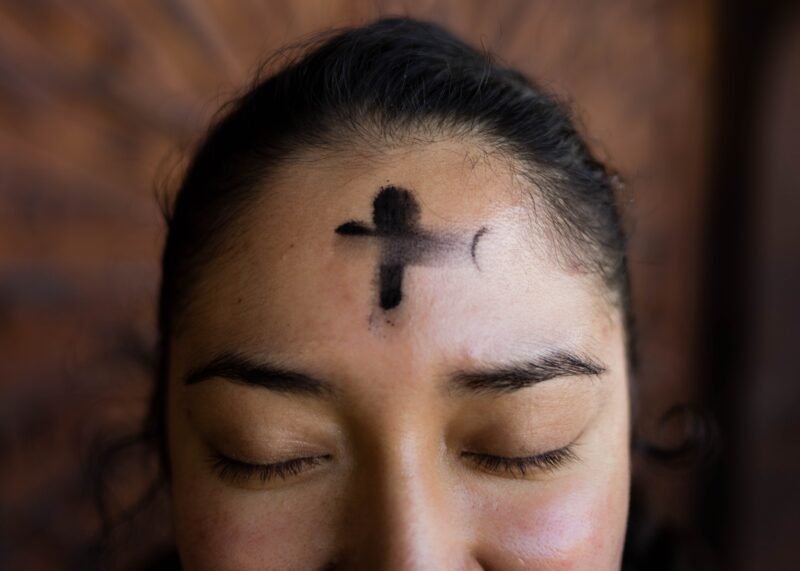
Photo by Austin Schmid on Unsplash.